
What happened and what was understood
Build one misunderstanding around a completed statement or action and an identified NPC. Keep the actual context beside the cues available to this person.
NPC & social
One observed cue.
A plausible wrong conclusion.
An opening to put it right.
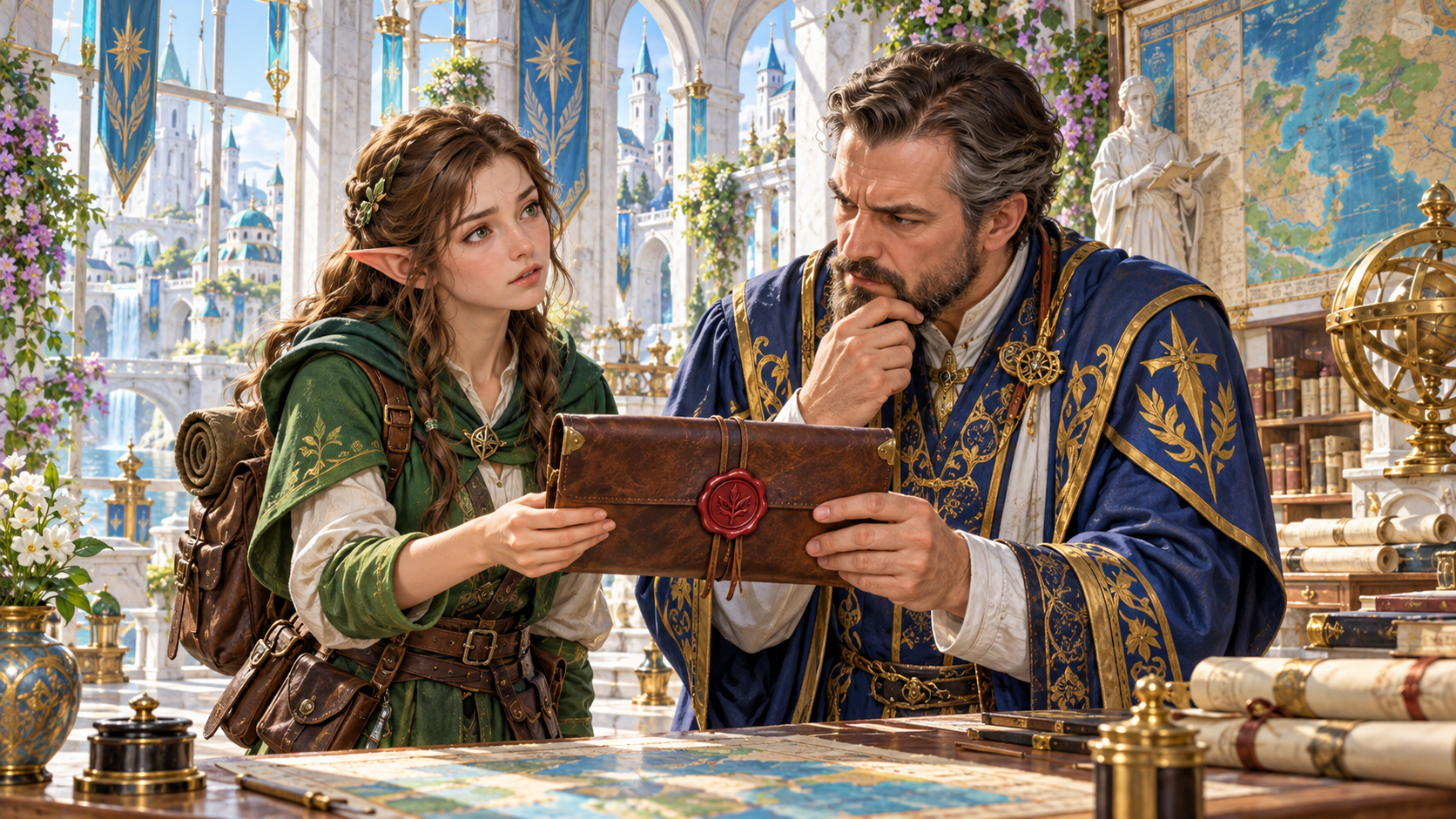
A believable misunderstanding
Prepare the mistake without changing the truth of your scene.
Build one misunderstanding around a completed statement or action and an identified NPC. Keep the actual context beside the cues available to this person.
Prepare an immediate response, a clarifying cue and an opening for repair. The Dungeon Master plays the NPC; the players choose what to say or do.
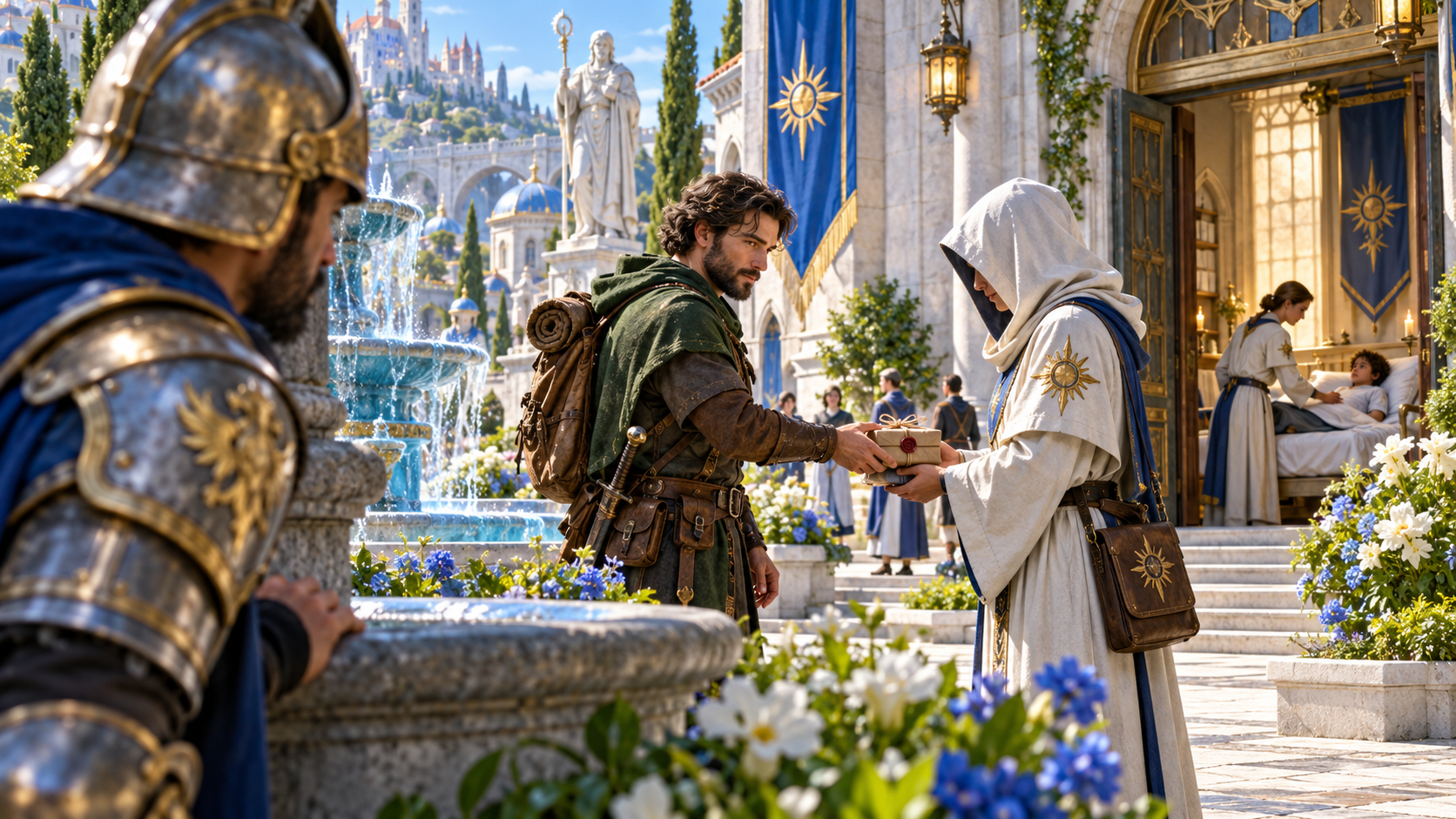
The view available to the NPC
A guard watches a traveller hand a wrapped parcel to a white-hooded healer. Through the clinic doorway, a patient and another healer give the exchange a wider context.
Set what really happened, what the NPC observed and which information was missing. Build a plausible inference from that limited view while keeping the underlying event intact.
What you can prepare
Give one mistaken interpretation a clear cause and a practical way into the next conversation.
Describe the statement or action, the person responsible, the identified NPC and what actually happened. Keep established facts at the centre of the scene.
Separate the real meaning from what the NPC saw or heard. Show how limited information supports a mistaken interpretation.
Add the NPC’s knowledge, missing information, expectations, culture, attention and relationship history. Respect what this person could reasonably understand.
Prepare the meaning the NPC believes, their confidence or doubt and other possible explanations. Keep the mistake specific and correctable.
Describe a visible tell, present behaviour and a local consequence. Give the Dungeon Master something concrete to play in the next conversation.
Prepare a clarifying cue and a practical opportunity to put the mistake right. Leave the response and outcome with your table.
Begin with the event, actor, NPC and context. Add intended meaning, knowledge gaps and competing explanations in Deep preparation; Quick retains those details.
Reroll six sections, lock sections against rerolls, edit and undo changes. A full generation replaces all sections, including locked sections.
Reopen the latest twenty full generations with their original inputs and results during the session. Download the current result before closing to keep it.
Choose the current full result or player view, or copy the read-aloud text separately. Review the audience and contents before sharing.
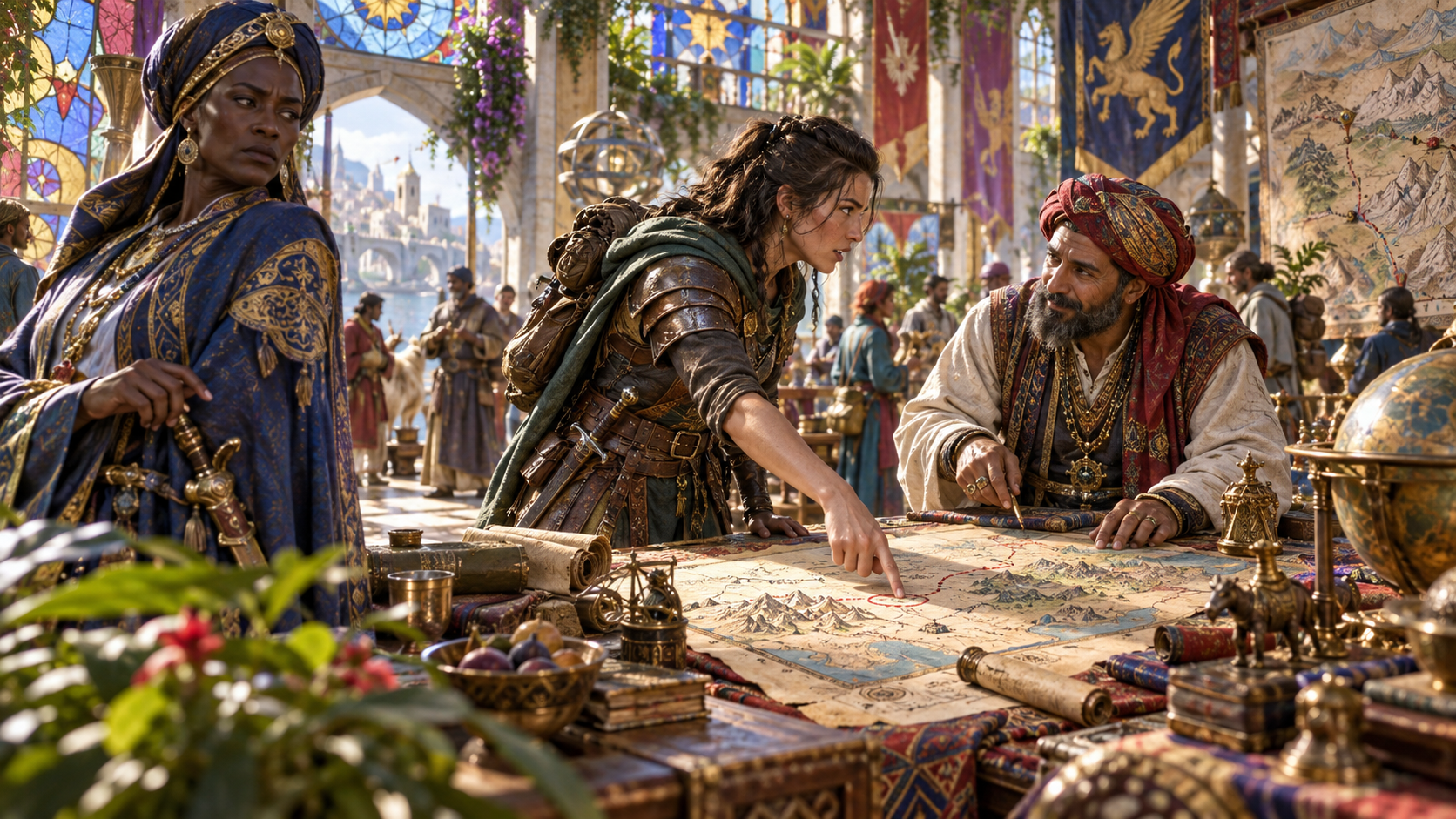
Knowledge, expectations and context
A traveller points to a marked route on a map while a merchant listens across the trade-hall table. Other people watch the conversation from their own positions.
Add the NPC’s knowledge, missing information and expectations. Consider culture, attention, pressure and relationship history, then review the mistaken meaning and competing explanations.
Quick or detailed preparation
Choose the detail you need for the next social scene.
Describe the completed statement or action, responsible party member, identified NPC, actual context and established facts.
Set what the NPC could see or hear, the tone and scene type. Choose whether the mistake concerns intent, identity, allegiance or significance.
Use Deep preparation for knowledge gaps, intended meaning and competing explanations. Keep the NPC competent within the information available.
Read the inference, confidence, visible tell, local consequence and repair opening together. Edit the result to fit the people and facts at your table.
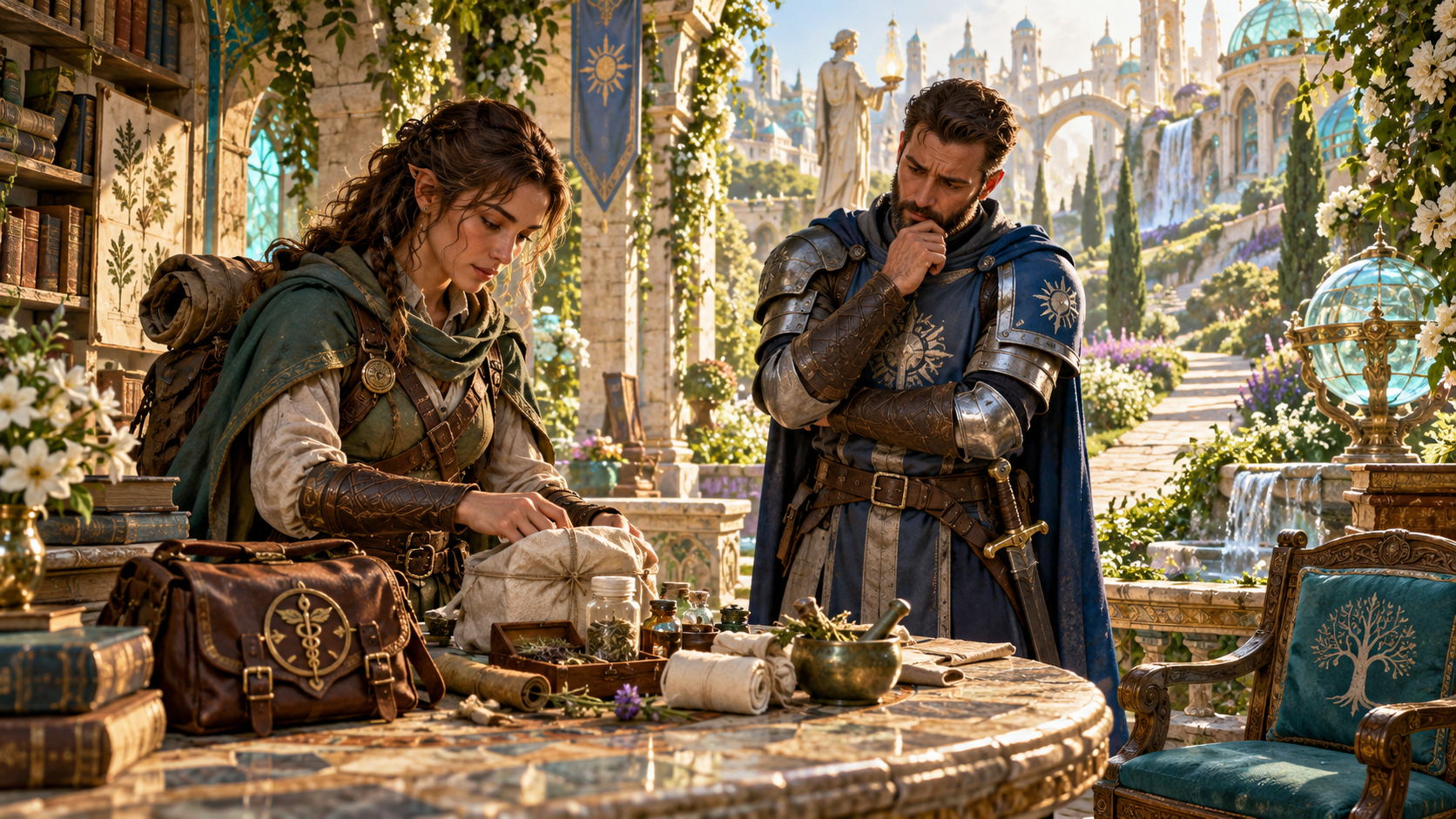
A clarifying cue and repair opening
A traveller opens the parcel beside herb jars and books in a garden archive. An armoured guard considers the contents, with the medical symbol on a nearby satchel adding context.
Give the table a practical opportunity to clarify the event. The new information opens a possible repair; the conversation and its outcome remain yours to play.
Review, revisit and share
Session history and exports serve different parts of your preparation.
Reopen the latest twenty full generations in the current session with their original inputs and results. Edits and rerolls do not update those history entries.
Download the current result before closing the session. Copy or print the full result or player view for your notes and table materials.
Lock sections against rerolls, edit and undo changes. Full generation replaces all sections; review retained text when changing inputs before a reroll.
Keep private Dungeon Master truth in your preparation. Review player-view and read-aloud material before sharing; the read-aloud can include the mistaken inference and possible clarification.
Your workspace and related products
Open VISINVOKE products through your account.

Open NPC Misunderstanding in the Generators collection of your signed-in desktop workspace. Prepare, review, edit and export the social scene from the same product home.
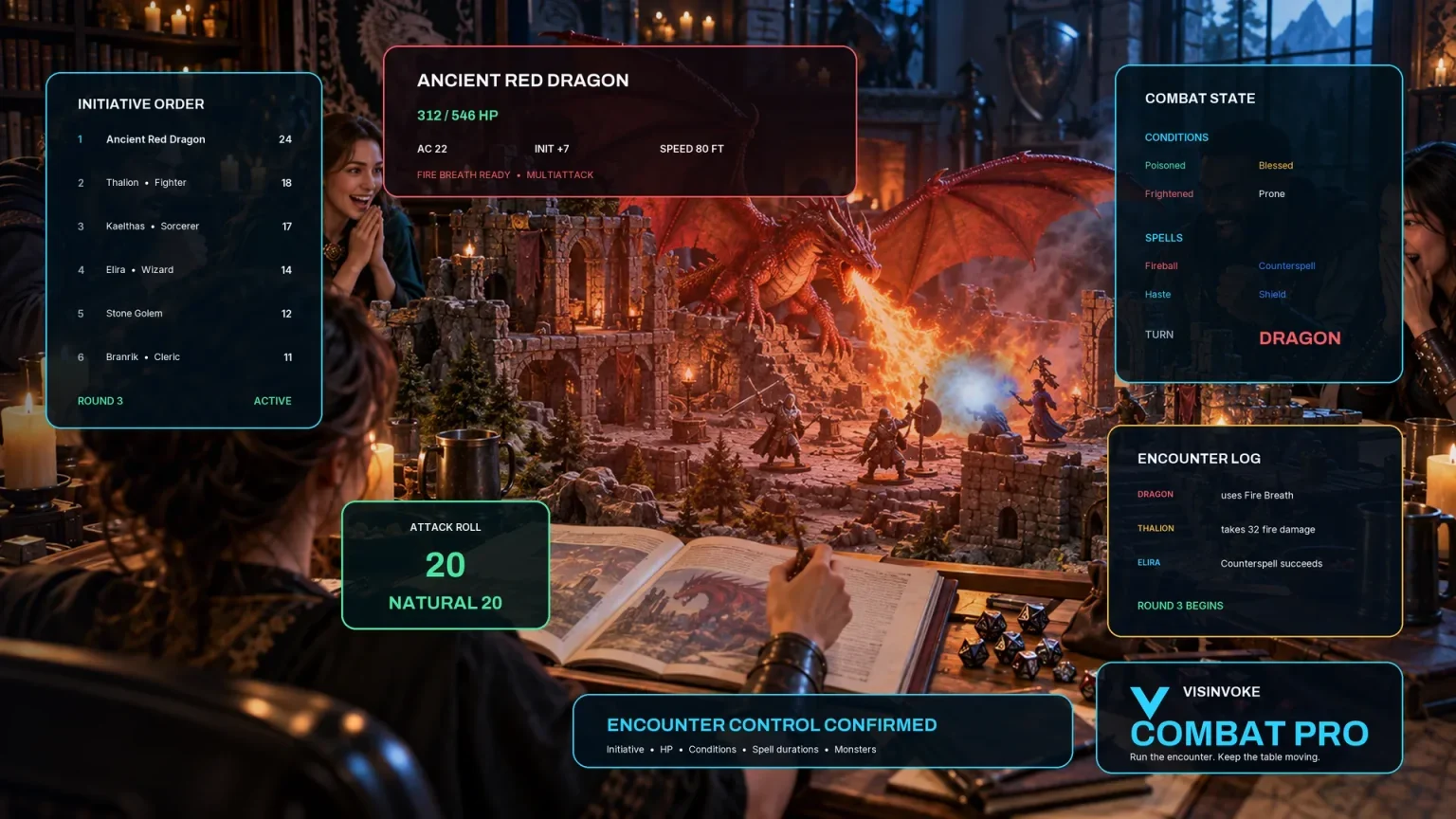
Use the separate encounter workspace when preparing combat. NPC Misunderstanding prepares a social interpretation and clarification opening, leaving your table in control of what follows.
Images are product illustrations. Suggested interpretations and repair openings leave player choices open.
Questions and answers
Facts, preparation, refinement and sharing at a glance.
One identified NPC’s plausible misunderstanding of a completed statement or action. It separates the actual event, observed cue and missing information, then supplies a mistaken inference, confidence or doubt, immediate response, clarifying cue and repair opportunity.
Quick establishes the event, actor, NPC, actual context, facts, cue visibility and scene tone. Deep adds NPC knowledge, missing information, intended meaning and competing explanations. Quick retains the Deep details you have entered.
Keep the actual event and intended meaning separate from the NPC’s interpretation. Review the suggested misunderstanding against your campaign facts; an NPC’s belief does not rewrite what happened.
Reroll individual sections, lock sections against rerolls, edit text and undo changes. A full generation replaces locked sections too. If you change inputs before a reroll, review the new passages alongside the retained event.
Session history holds the latest twenty full generations and reopens their original inputs and results. Later edits or rerolls do not update those entries. Download your current result before closing. Review full, player-view and read-aloud material for the intended audience, especially after edits.
Create a free VISINVOKE account or sign in, get Desktop Control Centre through your account installer page and open NPC Misunderstanding in the Generators collection. View current subscription details in your account.
Continue in VISINVOKE
Create a free VISINVOKE account or sign in to your existing account. Get Desktop Control Centre through your account installer page.
Open NPC Misunderstanding in the Generators collection. View current subscription details in your account.